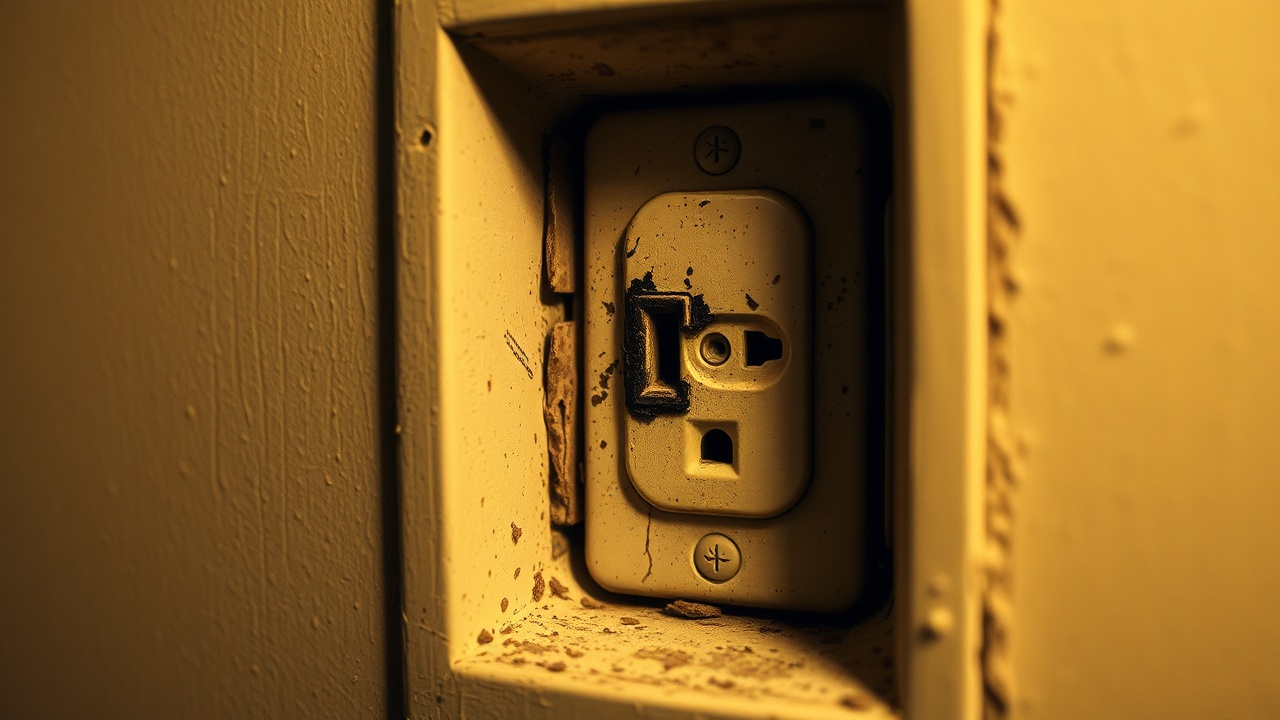
1. Flickering or Dimming Lights
If your lights flicker when you turn on the microwave or run the vacuum, it indicates an overload on the circuit. While minor flickering can happen with high-draw appliances, persistent dimming suggests loose wiring or a failing connection.
2. Breakers That Trip Repeatedly
Your circuit breaker is designed to protect your home from electrical fires. If a breaker trips frequently, it means the circuit is drawing more power than it can handle. This is a major red flag that shouldn't be ignored.
3. Outlets That Are Warm to the Touch
It is normal for outlets to get slightly warm when in use, but they should never be hot. If you feel heat radiating from a wall outlet, it could mean the wiring is loose or the outlet is damaged.
4. Burning Smell with No Visible Source
A faint, acrid burning smell coming from an outlet or near your electrical panel is a critical warning sign. It often indicates overheating wires or insulation melting. Turn off the power to that area immediately and call an electrician.
5. Two-Prong Ungrounded Outlets Throughout the Home
If your home still has two-prong outlets, it lacks a grounding path. This makes your electronics and appliances more susceptible to power surges and increases the risk of electric shock. Modern homes should have three-prong, grounded outlets.
6. Old Aluminum Wiring
If your home was built between the 1960s and 1970s, it may have aluminum wiring. While not inherently dangerous, aluminum expands and contracts differently than copper, which can loosen connections over time and create fire hazards.
7. An Electrical Panel Over 25 Years Old
Electrical panels have a lifespan of about 25 to 40 years. If yours is older, it may not be able to handle the power demands of modern appliances, such as EV chargers or large HVAC systems.