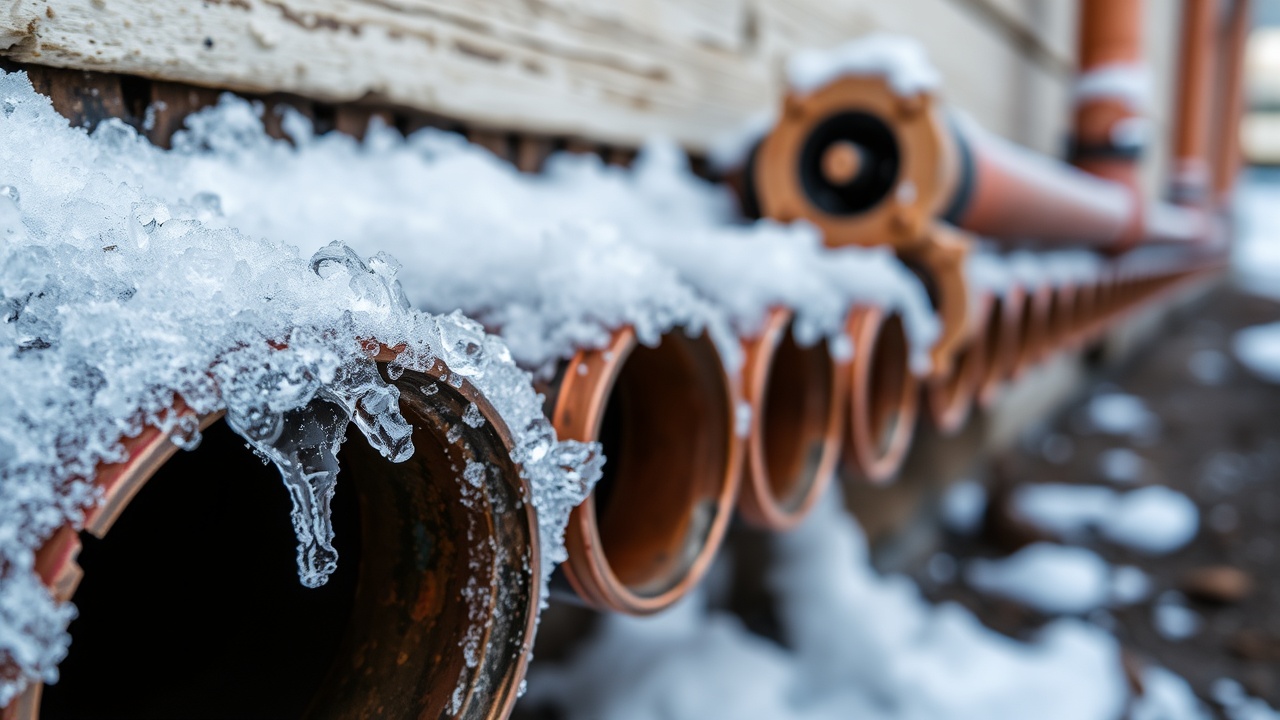
1. Insulate Exposed Pipes in Unheated Spaces
The most common victims of freezing are pipes located in unheated areas like basements, crawl spaces, garages, and attics. When temperatures drop below freezing, these pipes lose heat rapidly.
Use foam pipe insulation sleeves or heat tape on exposed pipes. It’s a cheap investment that acts as a thermal barrier, keeping the water inside at a safe temperature even when the outside air is frigid.
2. Know Where Your Main Shutoff Valve Is
If a pipe does burst, time is of the essence. You need to shut off the water immediately to minimize damage. Most homes have the main shutoff valve located near the water meter, often in the basement, crawl space, or outside near the foundation.
Pro tip: Test the valve once a year to make sure it moves freely. If it’s stuck, call a plumber to replace it before an emergency happens.
3. Let Faucets Drip on the Coldest Nights
Running water—even just a trickle—helps prevent pipes from freezing. As water flows through the pipes, it generates heat. On nights when the forecast calls for sub-freezing temperatures, especially on exterior walls, let your cold water faucets drip slowly.
Focus on the faucets farthest from your water heater, as those are usually the first to freeze.
4. Keep Cabinet Doors Open Under Sinks on Exterior Walls
If you have plumbing running along an exterior wall, the cold air can seep through the wall and chill the pipes. The space under your sink is often uninsulated.
Simply leaving the cabinet doors open allows warm air from the rest of the house to circulate around the pipes, keeping them warm enough to withstand the cold.
5. Schedule a Pre-Winter Plumbing Inspection
While DIY tips are helpful, sometimes you need a professional eye. A licensed plumber can identify weak points in your system, check for drafts around pipes, and ensure your heating system is working efficiently.
Don't wait until the first frost to find out your furnace is struggling. Schedule a seasonal inspection now to ensure your home is ready for winter.